

Sleep Debt: Can You Catch Up on Sleep?
 Camille Freking, MSc Pharmacology
 6/8/2022

- sleep
When you don’t get enough sleep, you probably feel it. You carry it around with you all day. You’ll feel groggy and lethargic. You might drink coffee like your life depends on it. Your body and mind are saying “you owe me a few more hours,” and they won’t relent until they get the sleep they’re asking for.
If this happens to you, you’re probably dealing with sleep debt. It’s important to listen to your body and meet its needs. Here’s what you should know about sleep debt, including how to resolve the issue when it happens and avoid it in the future.
What Is Sleep Debt?
Sleep debt occurs when you don’t get the proper amount of sleep. The correct amount of sleep will vary from person to person, but the current recommendation is that most healthy adults should be getting between 7 and 9 hours of sleep every night.
Everyone will technically have a sleep debt of at least 1 hour if they only sleep for 6 hours. Some people may sleep for 8 hours and still have a sleep debt of 1 hour if their body needs 9 hours of sleep.
Is Sleep Debt Real?
Sleep debt is real, but often misunderstood. You aren’t necessarily fixing your sleep debt if you slept poorly all week and decided to sleep for 10 hours on Saturday night. Sleep is an immediate need for your body that can’t be pushed into the future. The sleep you get five days from now won’t make up for the sleep you need today.
How Does Sleep Debt Affect People?
Simply put, sleep debt is the same thing as feeling tired all day. When you don’t get a lot of sleep, your body doesn’t have enough time to convert short-term memory to long-term memory, repair muscle and tissue, and let the immune system basically run maintenance.
Your body is busy working on maintenance tasks when you sleep, and it can’t afford to go without that maintenance period.
When you don’t sleep enough, you’ll feel lethargic and “run down” the following day. It’s clear that your body and mind are telling you to go back to bed.
If you regularly don’t get enough sleep, your body will begin to suffer. It’s normal to experience body aches, a diminished immune system, low mood, poor concentration, and slow memory recall if you’re frequently missing sleep.
Can You Catch Up on Sleep?
You can catch up on sleep, but you need to do it within a short window of missing that sleep. If you only sleep for 5 hours on Monday night, you can’t make up for that sleep debt on Thursday. You need to make up for it on Tuesday in order to set your body back on track.
How To Deal With Short Term Sleep Debt
If you wake up feeling the effects of sleep debt and you know you didn’t get the 7 to 9 hours of sleep that you needed, you need to plan to eliminate your sleep debt as soon as possible. You can’t push the issue into the future. Your body needs to meet its requirement for sleep.
Go Back to Sleep if You Can
If you wake up and realize you didn’t sleep enough, go back to sleep if that’s an option. If you won’t be late to work, school, a commitment, or an appointment, give yourself a little more time.
If your plans for the morning were flexible in nature, like grocery shopping or mowing the lawn, put them off until later. It won’t make a difference if you get to the grocery store two hours later than you’d planned.
Don’t Run for Caffeine
When many of us are tired, we run for caffeine. There’s nothing wrong with having a cup of coffee in the morning if you enjoy it as a part of your daily ritual. What you shouldn’t do is use caffeine as a substitute for sleep.
As tempting as it may be to run for caffeine when you begin to feel weighed down by the fatigue of sleep debt, you should avoid doing so. Your plan should be to fulfill your sleep debt by getting more sleep. Stimulants like caffeine can give you temporary energy that will make it difficult for you to get back to sleep (or take a nap) when you have the opportunity to doze off. You can still feel the effects of caffeine up to 6 hours after you’ve had that cup of coffee.
Instead of relying on caffeine, eat a balanced meal of healthy whole foods like lean proteins and healthy fats. This will help your body create subtle natural energy that won’t have lingering effects (or cause an afternoon crash) like caffeine might.
Take a Power Nap
Naps can help to restore mental alertness and ease the symptoms of sleep debt when used appropriately. Although it might seem like a long nap is a wise idea to restore lost sleep, it’s more likely to skew your schedule.
If your nap is several hours long, it may distort your sleep schedule. You might also wake up feeling groggy and slow as a result of disrupting your sleep schedule.
If you keep your naps short, confining them to 30 minutes or less, you’re more likely to wake up refreshed and energized. In 30 minutes, your body and mind can get a little boost from visiting the lighter stages of sleep.
Plan To Get Sufficient Sleep
If you know you didn’t get enough sleep last night, your plan should be to get to bed early tonight. Aim for a bedtime that will allow for a full 9 hours of sleep before your waketime rolls around. This will give your body enough time to rest and recharge. When you wake up, you should feel much better than you did when you went to sleep.
How To Avoid Sleep Debt
It’s better to avoid sleep debt than it is to handle it when it happens. You need consistent, high-quality sleep for your overall health. Sleep, like anything else you do for your health and wellness, needs to be a priority in your life. You should structure your day with sufficient sleep in mind.
Keep Your Mornings Energetic and Your Nights Laid Back
If you drink caffeinated beverages, limit them to the morning hours. The effects of caffeine can linger for hours. The sustained stimulation effects can make it difficult for you to get some sleep at night. Stop caffeine before lunchtime to avoid the lingering effects from disrupting your nighttime routine.
Exercise is vital for your overall health. While it requires you to use energy, it doesn’t wear you out. Exercise can make your body more efficient at using energy stored in the form of body fat. If you exercise in the evening, your body will experience an influx of natural energy.
It’s a better idea to get your workout at the beginning of the day. The natural energizing effects of exercise can help to sustain you, and your energy levels will naturally dwindle as the sun sets. If you do prefer to exercise at night, light stretching or mindfulness yoga can help you switch gears into a relaxed state without the energizing effects of intense cardiovascular exercise.
Be Firm About Your Bedtime
Seven to nine hours is a substantial part of your day, and you need a long stretch of uninterrupted time. The best way to ensure you get enough sleep is to set a bedtime that reflects your desired wake time.
Your bedtime should be the time you’re actually in bed and ready to go to sleep, not the time you start getting ready for bed or do your nighttime reading. If it helps, set an alarm for 30 minutes before your bedtime to help you stay on track. That alarm will give you a reminder to wrap things up and finish getting ready for bed.
Get Rid of Bedtime Distractions
Once you’re in bed, your ultimate goal is to fall asleep. You need to get rid of any distractions that may sway your attention. Your phone is usually the biggest culprit in this scenario. Your phone has the potential to throw off the momentum of your entire night. When you start scrolling, you lose track of time.
Your phone (as well as your TV and your computer) also emit blue light. Your brain perceives blue light similar to the way it perceives sunlight. Your circadian rhythm acts as your natural process of sleep-wake signaling, and it depends on light cues to release certain hormones and begin certain processes.
When your brain receives blue light, its signals and messaging become skewed. It doesn’t begin the process of getting ready for sleep because it thinks its daytime.
When blue light delays the natural release of sleep hormones like melatonin, you’re not likely to get to sleep when you want to. Putting away all electronics about an hour or more before bed can help. If you want to spend some time winding down before you go to sleep, reading a book with a yellow reading light, meditating, or doing a little pre-bed yoga won’t disrupt your circadian rhythm.
Set Yourself Up for All-Night Comfort
In order to fully receive the benefits of sleep, you need to stay asleep throughout the night. Interrupted sleep can leave you feeling exhausted the next morning, particularly if the interruptions are frequent.
Many people react to temperature fluctuations throughout the night. If you get hot and wake up to toss the covers off, that’s a sign that you need to keep your room cooler when you sleep. The recommended temperature for sleep is between 60 and 67 degrees Fahrenheit. A fan won’t cut it. Fans don’t actually make the room cooler — they simply circulate the air. Dialing down your thermostat is the only solution.
Choose bedding that feels good against your skin and provides the right level of warmth. It’s a bad idea to use a heavy quilt in the summer or to use a thin throw in the winter. Your bedding should always be appropriate for the weather. It’s worth splurging on high quality bedding that won’t feel scratchy or stuffy, since it’s going to be in contact with your skin all night.
Tuck Yourself in With a Hug
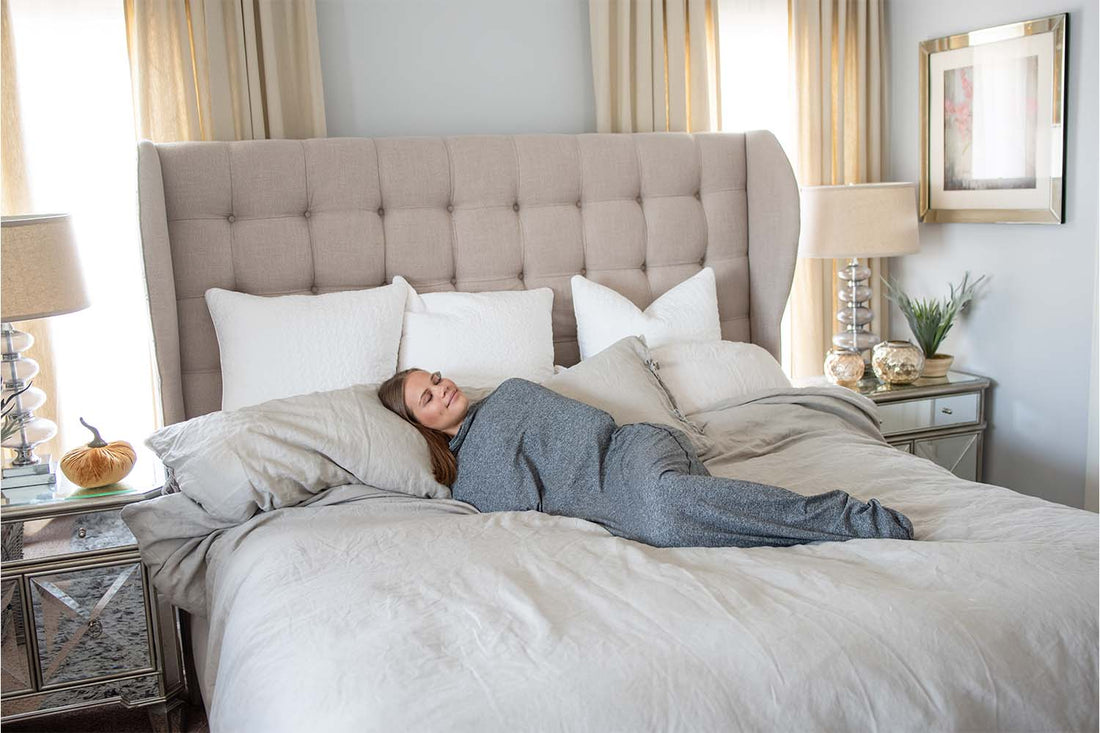
Many people find the sensation of swaddling to be calming. They feel secure when they’re tightly tucked in. The Hug Sleep Pod is made to allow you to tuck yourself in. You cuddle up into the pod, and the four way stretch provides gentle compression to your whole body. The fabric is breathable and soft, so it won’t feel hot or itchy inside.
Hug can keep you tucked in from dusk until dawn. If it helps you get better sleep, you’re more likely to wake up feeling refreshed, recharged, and ready to take on the day.
5 Ways to Prevent Nighttime Leg Cramps
Camille Freking, MSc Pharmacology
6/8/2022
You’re tucked in. You’re nice and comfortable. You’re about to drift off to sleep… and then it happens.
You get a leg cramp, and you’re jolted wide awake.
If this has happened to you, you’re not alone. Nighttime leg cramps are a common issue that many people live with.
Below, we’ll cover what you need to understand about leg cramps, including how to prevent them for a good night’s sleep.
What Are Nighttime Leg Cramps?
Nighttime leg cramps are a unique type of cramp that occurs at night. Many people who don’t regularly experience leg cramps throughout any part of their day will find that their legs begin to cramp up only when they lie down to go to sleep.
These cramps often affect the calf muscle, which makes some people refer to them as “charley horse” cramps. The muscle contracts suddenly and independently, leading to a painfully tight feeling that lasts from a few seconds to a few minutes.
People often find it uncomfortable to attempt to walk with leg cramps. Attempting to relax enough to get some sleep often feels out of the question until the cramps pass. If the cramps recur throughout the night, they can significantly disrupt sleep.
What Causes Nighttime Leg Cramps?
Leg cramps tend to be more common in older adults, but they can happen at any age. There’s also no single cause for nighttime leg cramps; rather, there are myriad reasons you could be experiencing pain and tightness in your calf muscles.
Nighttime leg cramps by themselves aren’t recognized as a standalone medical condition. They’re usually a symptom of something else or a natural reaction of the body. That said, let’s dive into some of the more common causes of nocturnal leg cramps.
Overuse of Muscles
Frequent exercise, long periods of intense physical activity, and even standing all day at a job put a lot of strain on your muscles. Your muscles need adequate time to recover after they’ve been used for prolonged periods of time.
You may experience aches, pains, or overuse injuries if you don’t allow your muscles enough time to rest. Staying off your feet when possible and reducing the frequency of your exercise can reduce the potential for muscular cramps all throughout your body.
Pregnancy
Nighttime leg cramps are common during pregnancy. When you’re pregnant, your body changes the way blood flows. In some cases, this can lead to hindered circulation and cramping in your legs.
Pregnant women should note that these are different from traditional nocturnal leg cramps. Your doctor may recommend certain supplements or therapies that can help to reduce the frequency of cramps throughout your pregnancy.
Dehydration
Muscles are highly prone to cramping when your body is dehydrated. This dehydration can occur in a number of ways. Forgetting to drink enough water, using diuretics (also known as water pills), and drinking alcohol can all contribute to dehydration.
Medication Side Effects
Some steroids, diuretic medications, and mental health medications like antidepressants or mood stabilizers list nighttime leg cramps as a potential side effect.
If you’re currently taking medications that may be contributing to nighttime leg cramps, make sure to raise the issue with your doctor. Your doctor might recommend switching or adjusting medications if cramps in your leg muscles are causing you a lot of trouble.
Other Causes
There are so many different causes of leg cramps that it can be difficult to pinpoint the culprit. Some additional risk factors for leg cramps can include high blood pressure and cholesterol (sometimes treated with statins) and motor nerve damage.
It may seem strange, but internal organs that aren’t close to the affected leg can still be responsible for uncomfortable cramps. Health conditions like kidney disease and associated peripheral neuropathy, for instance, can lead to pain and cramping in the leg muscles. Similarly, cirrhosis and thyroid problems can both be a cause of nighttime leg cramps.
Beyond that, there are neurological disorders like Parkinson’s disease that may affect muscle function and lead to leg spasms and cramping. Cramping may even be a side effect of the stiffness and limited mobility that comes from conditions like osteoarthritis and spinal stenosis.
What Is the Difference Between Nighttime Leg Cramps and Restless Leg Syndrome?
Unlike nocturnal leg cramps, which can be the result of numerous things, restless leg syndrome is recognized as a unique medical condition.
Restless leg syndrome is much more complex than simple leg cramps at nighttime. Many people with RLS feel uncomfortable, persistent sensations in their legs that are only alleviated with movement. The constant urge to move inhibits their ability to relax.
Should I See My Doctor About Nighttime Leg Cramps?
If you can easily correlate your leg cramps to low water intake or heavy athletic activity, first make sure you get sufficient rest and drink plenty of fluids. These remedies will likely help your leg cramps fade over the course of a few days.
However, you should see your doctor about nighttime leg cramps if they occur frequently and don’t have an apparent cause.
Additionally, if you believe your nocturnal leg cramps may actually be restless leg syndrome, you should see a healthcare professional. In some cases, doctors will recommend medication for people experiencing severe restless leg syndrome.
How To Prevent Nighttime Leg Cramps
If you’re experiencing run-of-the-mill nighttime leg cramps, there are a few things you can do to ease your cramps and reduce their frequency. For the most holistic care, try a little bit of everything.
1. Stretch Before Bed
Stretching helps to release tension in muscles and promote circulation. You can stretch however you’d like, though we’d especially recommend calf stretching if you suffer from the charley horse type of nighttime leg cramps.
Many people feel that yoga is a great pre-bedtime stretching routine. Yoga encourages the practice of mindfulness and relaxation, and it might just give you the reduced muscular tension and clear mind you need for good sleep.
2. Prioritize the Health of Your Muscles
If your muscles are cramping, they’re probably trying to tell you something. They could be asking for more rest, particularly if you’ve been active or on your feet a lot more than usual.
They could also be asking for more protein-rich foods to help repair themselves. Or they might need more calcium, which muscles use to facilitate communication with your nervous system.
A well-balanced diet rich in protein, vitamins, and minerals will keep your muscles healthy and improve their ability to recover. Combining a well-balanced diet with an appropriate amount of exercise is important for your overall health, as long as you give your muscles enough time to rest.
3. Take a Warm Bath
Warmth helps to relieve muscle cramps. A warm bath can help to ease sore muscles throughout your body and promote relaxation — especially when combined with Epsom salts to leave you feeling at ease.
4. Utilize Massage Therapy
If your muscles need a little help healing, you might try massage therapy. You’ll want to tell your massage therapist about the circumstances of your leg cramps, your cardiovascular health, and your level of physical activity. Your massage therapist will also want to know if you have a history of injury relating to your calf muscles.
Your massage therapist will choose an appropriate massage technique to promote better circulation, lymphatic drainage, and tissue healing throughout your legs.
You’ll probably need more than one massage to maximize the benefits, especially if you’re prone to leg cramps. Follow your massage therapist’s suggested schedule.
5. Stay Hydrated
Your body is mostly water. Every organ, muscle, and piece of tissue in your body requires water to properly function — so if you’re dehydrated, your muscles are likely to feel sore.
If you’ve been sweating a lot, exercising a lot, or simply neglecting your minimum water intake for the day, you’ll need to make an effort to stay hydrated.
In addition to water, your body needs electrolytes like potassium and magnesium to help regulate your hydration. Magnesium in particular has been correlated with a reduction in muscle cramps and spasms.
Before you start supplements, talk to your doctor about what you need. Sometimes, a change of diet that prioritizes nutrient-rich foods is a better solution than over-the-counter mineral supplements.
6. Try Topical Products
Over-the-counter oral painkillers like ibuprofen and naproxen won’t make leg cramps vanish immediately. And, while research suggests that newer prescription medications like diltiazem may help prevent nocturnal leg cramps, the FDA notes that older remedies like quinine have been associated with serious health risks.
Luckily, there are plenty of topical muscle rubs that can provide on-the-spot relief to cramping muscles. These creams often contain natural ingredients like menthol or capsaicin to provide relief for leg pain.
Combining these creams with a light massage of the affected muscle can help promote relief for achy muscles. Just make sure you follow the instructions for your topical products and keep them away from broken skin.
Getting Better Sleep When You Have Leg Cramps
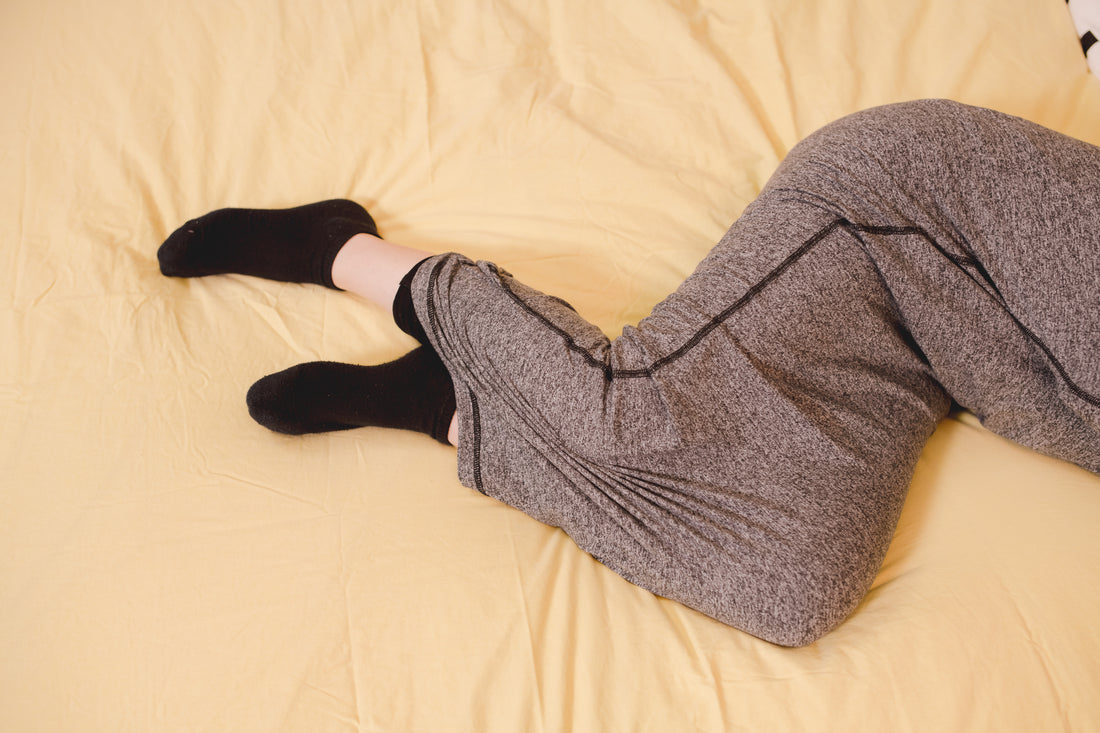
The best ways to avoid nocturnal leg cramps involve relaxing and eliminating tension from your muscles. If you feel most at ease when you’re all swaddled up, try the Hug Sleep Pod.
The Hug Sleep Pod is based on the same principles as deep touch pressure therapy (DTPT). Some people feel a profound sense of relaxation in a firm embrace, and the Sleep Pod provides you with this kind of embrace all night long.
When you snuggle into your Sleep Pod, it creates gentle four-way compression over your whole body. The fabric is lightweight and breathable, so it won’t feel stuffy inside.
With your problem muscles stretched and at ease, our all-over hug can help you stay relaxed all night long.
Why Can’t I Stay Asleep? 8 Tricks to Sleep All Night
Camille Freking, MSc Pharmacology
6/8/2022
Some people have trouble falling asleep, while others have trouble staying asleep. If you find yourself waking up throughout the night, the problem is usually easy to remedy.
Making a few changes to your nighttime habits and your bedroom environment can set you up for the sustained relaxation you need to fall asleep and stay asleep.
Do Over-the-Counter Sleep Aids Help?
Before you run for over-the-counter sleep aids to solve your sleep problems, there are a few things you should be aware of. Even if sleep aids aren’t habit-forming, they aren’t intended to be used long term. They might help you get a good night’s sleep, but they’re likely to leave you feeling groggy and sluggish when you wake up the next day.
Medications and supplements for sleep aren’t always benign, either. They can lead to side effects like appetite changes, digestion problems, dizziness, dry mouth, heartburn, reflux, and even addiction.
They also don’t fix the actual problem. Rather, sleep aids are more of a brute-force method. They might make you sleep through the night, but they don’t address the underlying reasons why you’re having trouble sleeping. When you stop using sleep aids, those obstacles to uninterrupted sleep will still be there.
It’s important to identify and address the problem at the root. Your body needs high-quality sleep on a consistent basis for strong physical and mental health. This means making some changes to your sleep environment to facilitate a good night’s rest.
Could I Have Insomnia or a Sleep Disorder?
If you suspect that a serious condition like insomnia, sleep apnea, chronic pain, or restless leg syndrome is making it difficult for you to fall asleep, you need to speak to your doctor as soon as possible. These issues require treatment by a health professional.
Changing your routines and habits won’t address the source of the problem. You’ll be dealing with sleep deprivation and struggling to get healthy sleep until your doctor works with you to create a treatment plan.
If you’ve had trouble falling asleep or staying asleep for several consecutive nights and you know something isn’t quite as it should be, it’s time to contact your primary care provider.
If you’re reading this for a solution at 3 a.m.? Call your doctor in the morning.
1. Start a Relaxing Bedtime Routine
Sleep shouldn’t only happen when your body succumbs to exhaustion, and the process shouldn’t start when you lie down. Rather, it should be a gradual transition that starts at the beginning of your “getting ready for bed” process.
It’s difficult to jump from cleaning up the house and taking care of your family to sleeping peacefully. Instead, try to develop good sleep hygiene and allow for a gentle transition period where you can spend time winding down before bed.
Gentle activities like yoga, reading, journaling, knitting, or drawing will give you a moment of healthy respite to calm down. Your body will have time to begin the process of preparing your body for sleep, releasing natural hormones like melatonin that inform your body that bedtime is approaching.
After you’ve completed your relaxing activity, take your time brushing your teeth, applying your skincare, and changing into your pajamas. You might also try some relaxation techniques like meditation and deep breathing.
The bottom line? If you’re looking for better sleep, try not to make yourself feel like you’re racing to get there.
2. Kick Caffeine to the Curb
Most people understand that a double shot of espresso or a caffeinated tea isn’t a wise idea at bedtime. But what many people don’t realize is just how long the effects of caffeine can last. Your after-dinner cup of coffee may still be stimulating you at bedtime.
The effects of caffeine can last up to six hours. Even if you only have a small amount of caffeine every day, the residual stimulation might be enough to keep you from falling asleep or staying asleep.
Most people will find that cutting off caffeine around lunchtime gives their body enough time to process the caffeine they’ve ingested. To help you get enough hours of sleep, it’s a good idea to set a caffeine cutoff time about six hours before you go to bed.
3. Be Firm About Your Bedtime and Wake Time
Your body really loves routine. That’s why you usually get hungry around the same time every day: Your body is expecting a meal, and it’s prepared to receive one.
If your sleep schedule is entirely unpredictable, your body won’t know when it’s supposed to get tired. If you go to bed at 9 p.m. some nights and 2 a.m. others, you’ll confuse your body so that it doesn’t have the slightest clue when it’s supposed to begin releasing sleep hormones.
Creating a sleep routine with a firm bedtime and wake time will help your body get used to falling asleep predictably. This can also help you stay asleep throughout the night for better sleep quality.
At first, it may be difficult to adjust to a firm bedtime and waketime. If you work from home or otherwise have the freedom to create your own schedule, you probably aren’t used to adhering to these kinds of rules.
Over time, though, your body will get used to the new pattern. Before you know it, you won’t need a clock to know when it’s time to go to bed and when it’s time to wake up.
4. Don’t Take Naps
There’s a time and place for naps. If you occasionally don’t get enough sleep, a 20-minute power nap can help you feel refreshed and recharged enough to face the rest of your day. But longer naps don’t have the same benefits.
A nap lasting longer than 30 minutes can leave you feeling disoriented, foggy, and more tired than you were to begin with. It may also exacerbate daytime sleepiness and disrupt your body’s natural rhythms so that you feel rested and refreshed just when it’s time to turn in for the night.
5. Keep Your Room Free From Distractions
Sometimes it isn’t you. If external factors seem to be conspiring against you, you’ll need to make some changes to achieve restful sleep.
If you’re a light sleeper, your sleep environment may be working against you. Is there loud traffic outside your house leading to 3 a.m. awakenings? Do you have noisy neighbors that stay up all night? Is there a street lamp flooding your bedroom?
Some of these issues are easier to remedy than others. If you have partying neighbors, you can file a noise complaint. If you share a landlord or a property manager with those neighbors, you can take your concerns up with the appropriate authority.
If normal ambient noises seem to rouse you from a deep sleep, a white noise machine can help to drown them out. If you don’t have a white noise machine, a standing fan will serve a similar purpose. It might also make your room feel a little less stuffy as it helps to circulate the air.
For more serious environmental noise pollution like trains and busy intersections, you can soundproof your room with padding and wear earplugs.
If it’s still too loud or impossible to block out, consider moving. Sleep is integral to your health. It’s not worth risking your health to stay in a place that’s too loud for you to sleep.
6. Sleep Alone
It’s lovely to sleep next to a partner — but less so if that partner is an active sleeper. If your partner moves around a lot, snores, or talks in their sleep, it might be best for you to sometimes sleep in separate rooms.
If the person in your bed doing all the kicking and rolling is a toddler, it may be time to transition them into sleeping independently. It’s better for both children and parents to sleep separately, since both parties need quality sleep.
7. Keep Your Phone Out of Sight
There are two very important reasons to keep your phone away from you while you sleep. The first is to prevent yourself from frequently checking the time to see how long you’ve been awake or what time you’ve woken up. Your alarm will tell you when it’s time to get out of bed, and that’s all you need. Let it go off when it goes off.
The second reason is that phones and electronic devices are inherently harmful to your sleep cycle. Electronic screens emit blue light, which makes your brain believe it’s daytime. This delays your circadian rhythm and significantly disrupts your sleep cycle.
If you have a tendency to scroll through social media in the middle of the night when you can’t get back to sleep, you’re only pushing sleep further away. Let your phone charge on the opposite side of the room, and don’t pick it up again until you get up to silence your alarm.
8. Get Up and Reset
When you wake up in the middle of the night, don’t get up. Don’t check the time. Unless you need to get a drink of water or use the bathroom, you should immediately attempt to fall back to sleep.
If your attempt doesn’t work, get up and find something low intensity to do. Go into a different room to read a book or pet your cat. Walk outside to get some fresh air and look up at the stars for a few minutes. Amble around until you begin to feel yourself getting tired again, and then lay back down.
This will help you avoid the frustration of the situation. If you start to get restless or tense about the fact that you can’t get back to sleep, you’ll only make it harder for yourself. Switching gears for a minute will allow your body to remember what it was trying to do.
Staying Comfortable All Night
Parents help their babies sleep through the night by swaddling them. Swaddles make people feel snug, comfortable, and secure.
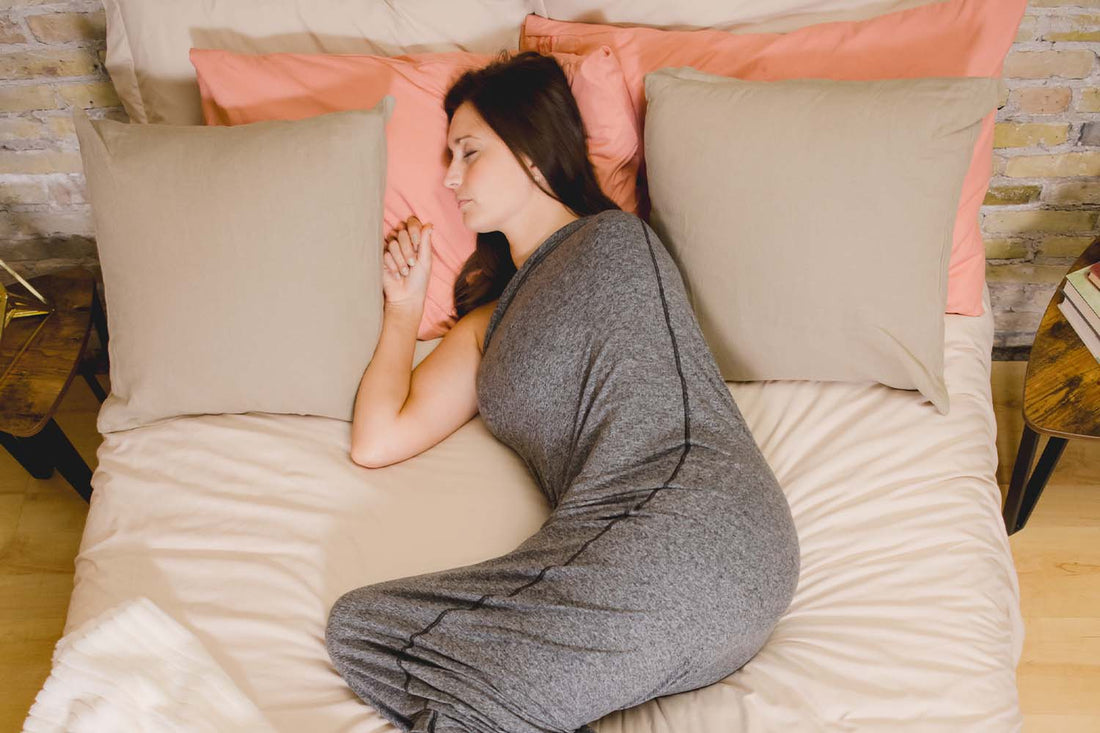
But you don’t need to be a baby to enjoy the benefits of a soft embrace at bedtime. The Hug Sleep Pod is like a swaddle, but it’s for people of all ages (read: kids and adults alike!). You cozy up in the soft, lightweight sleep pod, and the sleep pod provides light compression from every direction.
This mimics the comfort and security of swaddling, which helps activate the parasympathetic nervous system (PSNS) and triggers the release of sleep-facilitating hormones like serotonin and dopamine.
Deep Touch Pressure Therapy, or DTPT, uses this science and gentle pressure on certain parts of the body to activate the PSNS and lull your body to sleep.
Our Sleep Pod makes use of a four-way stretch fabric to achieve DTPT sensations and signal to your body that it’s time for sleep.
Let us give you a goodnight hug with the Sleep Pod.